
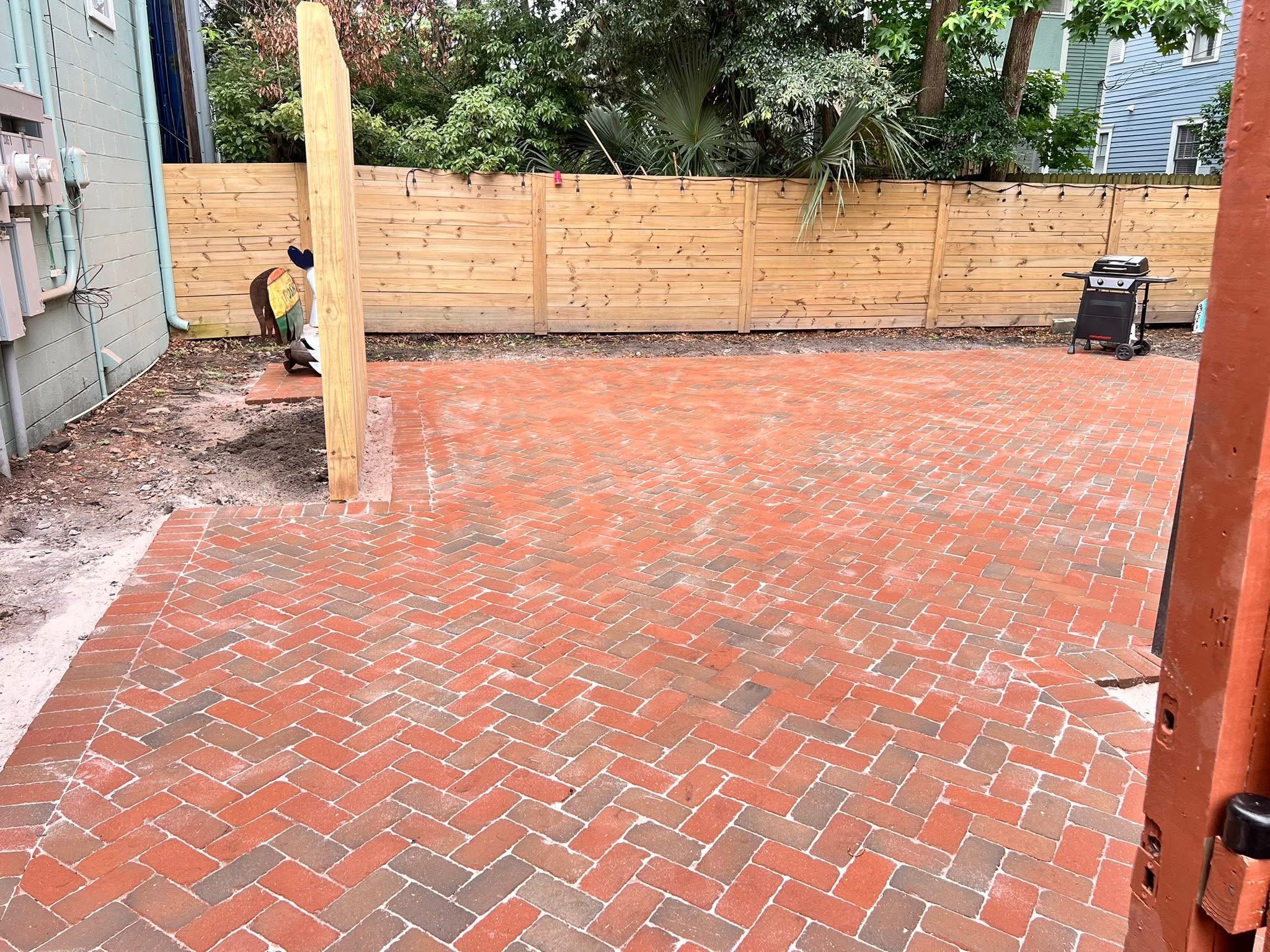
Brick patios that look like they were always there.
Reclaimed and new brick, laid by hand on a sand bed over a compacted base. Patios, courtyards and walkways around Savannah.
Why brick
In Savannah, brick never looks out of place.
Half this city is built on brick — the sidewalks downtown, the garden walls, the houses in Ardsley Park. A concrete paver patio can look fine, but it reads as new. Brick, especially reclaimed brick, fits in from day one.
And it ages upward: moss in the joints and worn edges make it look better at ten years than it did the week it was finished.
Patterns
The pattern changes the price and the character.
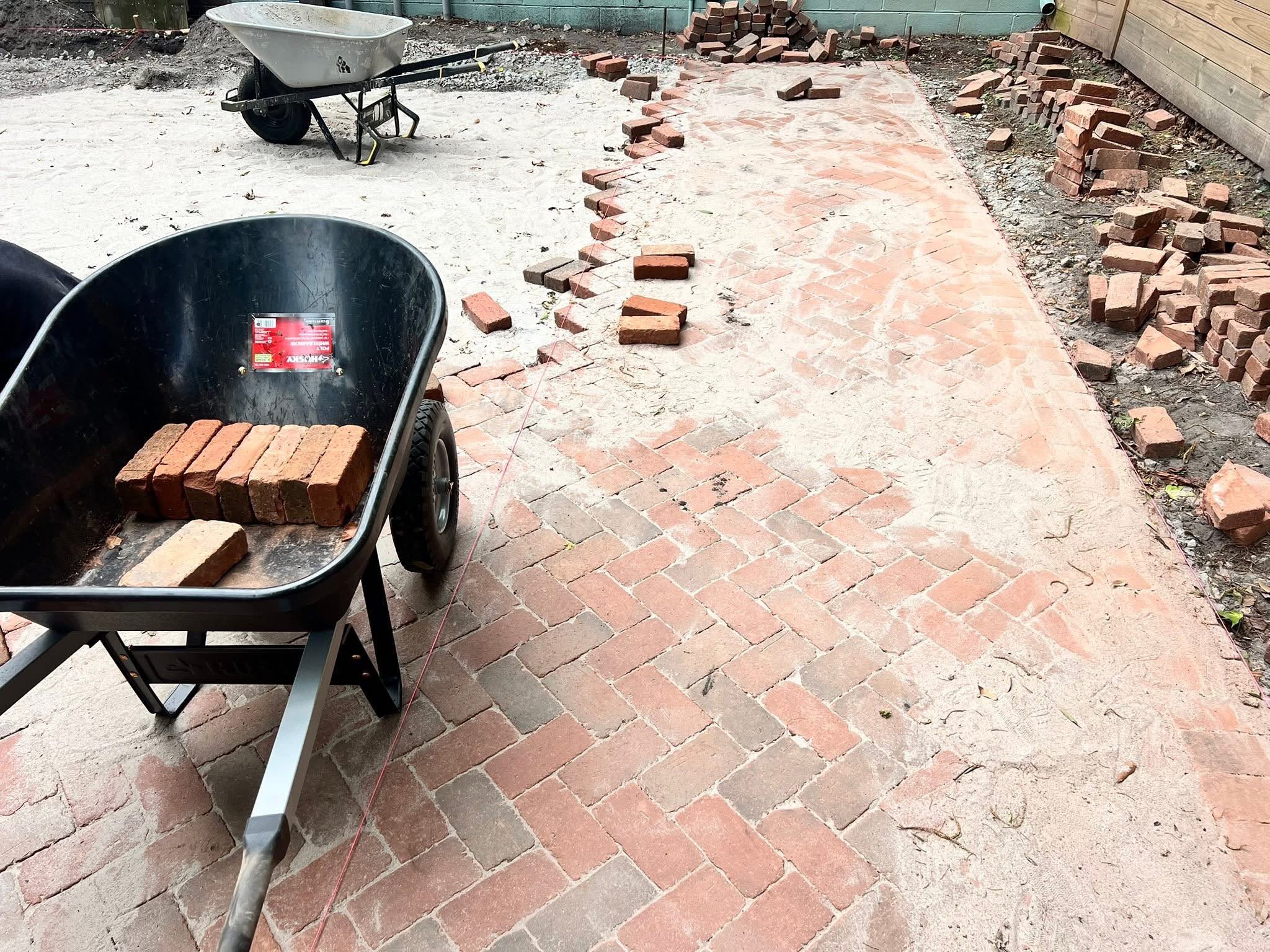
These are the four we lay most. On the walk-through we show you how each one sits in your actual space.
Herringbone
The strongest against movement and the most classic look here. Run at 45° it needs more edge cuts, so it costs a bit more in labor.
Running bond
Straight courses with staggered joints. The cheapest to install and the best choice for a narrow walkway.
Circle
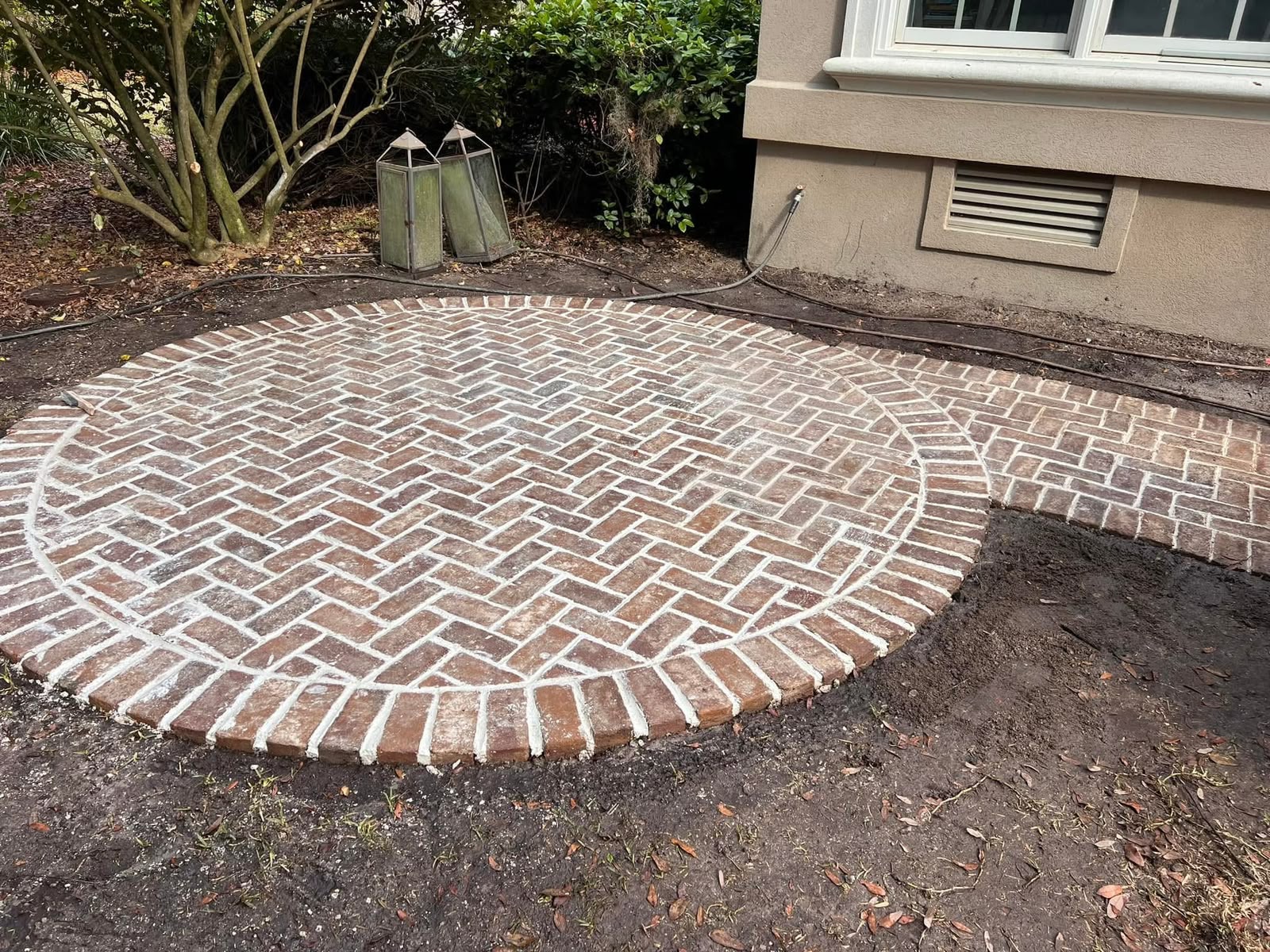
A circular herringbone field with a cut soldier ring. Every brick in the ring is cut by hand. It's the one people stop and look at — and the slowest to build.
Basketweave
Pairs of bricks alternating direction. A garden-courtyard look that works well in small enclosed spaces.
Soldier border
The ring of bricks stood on edge that finishes the perimeter. It isn't decoration — it holds the field and defines the shape.
Brick with slab or gravel
Brick borders with a large-format slab or gravel field. Cheaper per square foot and a more modern look.
Material
Reclaimed brick or new brick.
Both are good. The difference is what you want it to look like.
Reclaimed
Uneven color, worn edges, old mortar still stuck to some faces. That's what makes it read as old. It has to be hand-sorted with maybe 10–20% thrown out, and availability depends on what's around that month.
New brick paver
Even color, exact dimensions, crisp edges. Faster to install because there's no sorting, and you can always order more of the same run if you extend the patio later.
A blend
A new-brick field with a reclaimed border, or the reverse. Splits the difference on both price and looks.
Common questions
What people ask about brick.
Do brick patios cost more than concrete pavers?
Usually a little more in labor — brick is smaller, so there are more pieces per square foot and more hand cutting at the edges. The base work underneath is identical. Reclaimed brick can run above or below new pavers depending on what's available.
Can you match the old brick already on my house?
Often, yes. Reclaimed brick gets sorted by color and size before it goes down, and we can blend batches so a new patio reads the same as older brick on the house or the garden wall.
Should it be sand-set or mortared?
Sand-set over a compacted base is the right call on the Georgia coast — it lets the patio move with sandy soil instead of cracking, and single bricks can be lifted and reset. Mortar only makes sense when there's already a sound concrete slab underneath.
Is brick slippery when it's wet?
Brick has more texture than smooth concrete, so it's generally less slick. Shaded areas can grow algae over the years — a wash every couple of seasons takes care of it.
How long does it take?
Most courtyard-sized brick patios run four days to a week. Circles and tight herringbone take longer because every edge piece is cut individually.
Do you work downtown?
Yes. In historic areas you have to plan for narrow access, hauling by hand, and in some cases city review before starting. We price that in up front instead of surprising you later.
Where we lay brick
Savannah and the whole coast.
These are the areas we work in and everything around them — from the Historic District out to the islands, and inland as far as Statesboro. If your area isn't listed, call anyway.
Next step
Send a photo of the spot. We'll tell you what fits.
With a photo and a rough measurement we can give you a range before we even drive out. The firm estimate is free and in writing.