
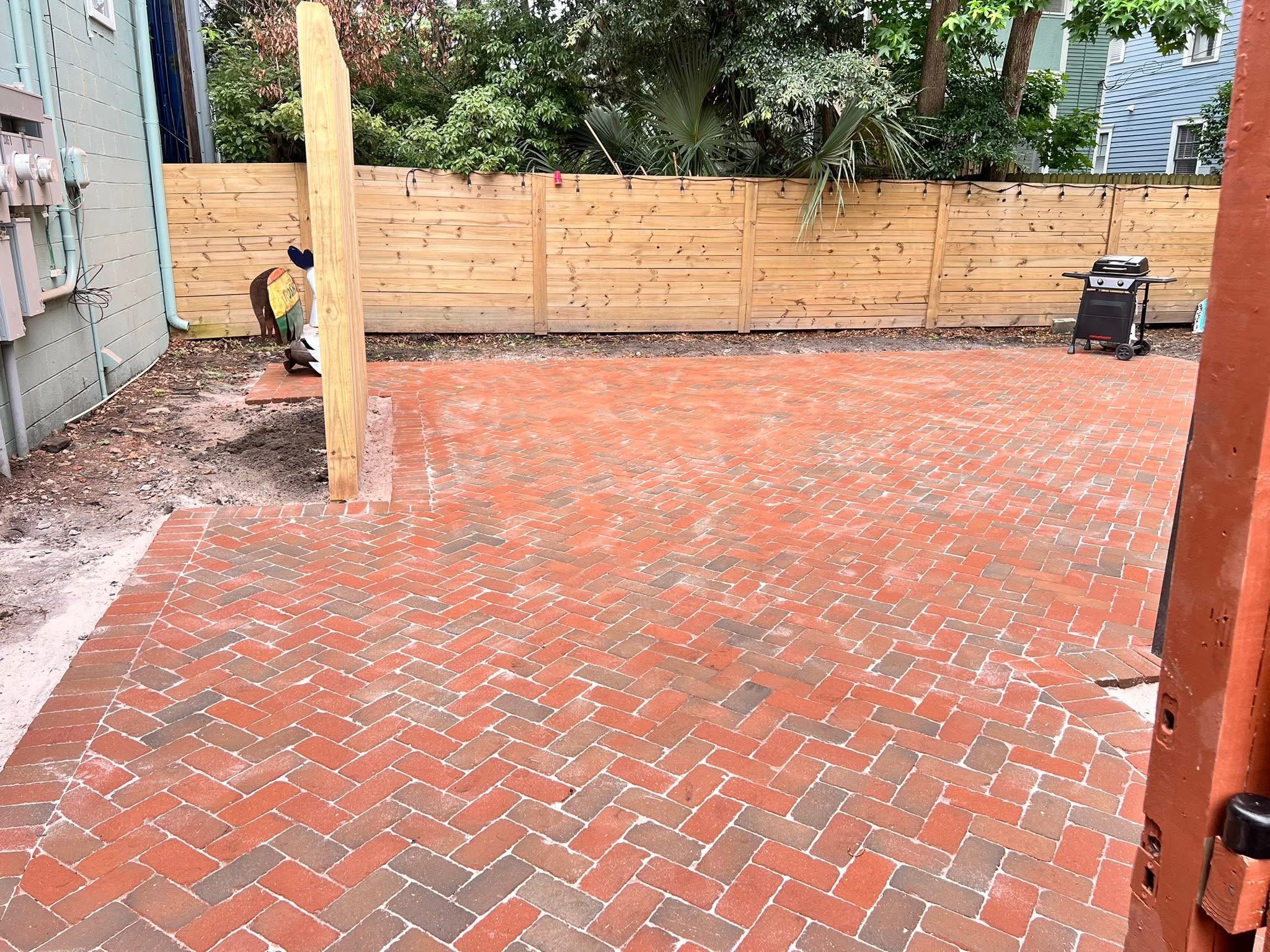
Pavers that are still flat in five years.
Brick patios, walkways and driveways around Savannah. What holds up isn't the paver — it's the compacted base underneath it.
Done properly
The real work happens below grade.
A paver patio that dips on one side or grows weeds through every joint almost always has the same problem: a thin base, poor compaction, or no edge restraint. The pavers look identical on install day.
We excavate to the depth the use calls for, compact in lifts, then close it out with staked edging and polymeric sand.
Where it goes
Three surfaces, three different bases.
Patio
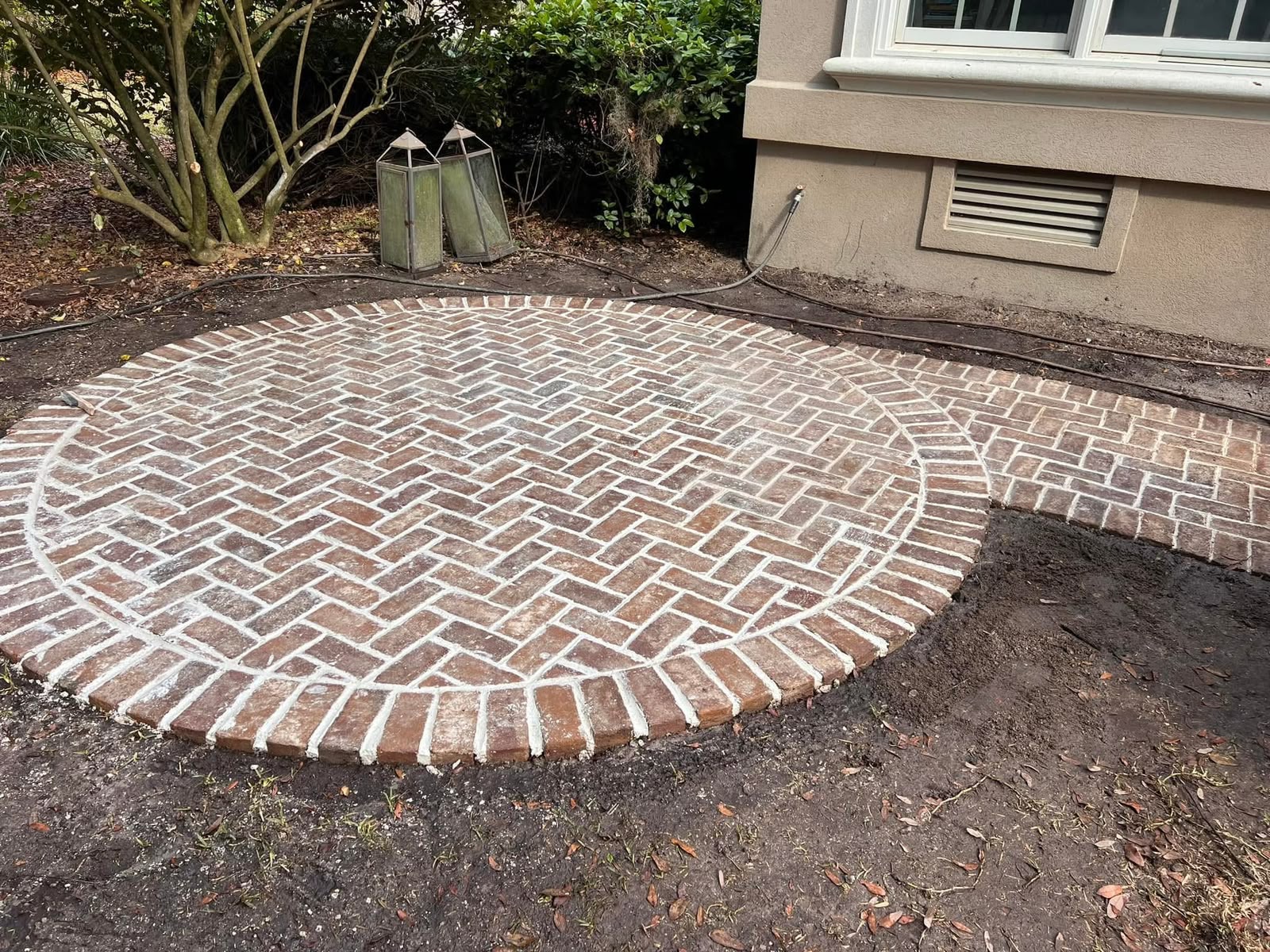
Seating area, outdoor dining, or the floor under a pergola. Medium base, pitched away from the house.
Walkway & entry
From the street to the door, or the deck to the yard. Narrow, curved where it needs to be, with a border course to define the edge.
Driveway & pool deck
A much deeper base and a thicker paver for vehicle weight. Around pools, a contrasting border course and coping.
Paver & brick work
Reclaimed brick, modern pavers and patterns you don't see around here.
Step by step
Nobody sees this part. It's the part that matters.
Excavate & haul
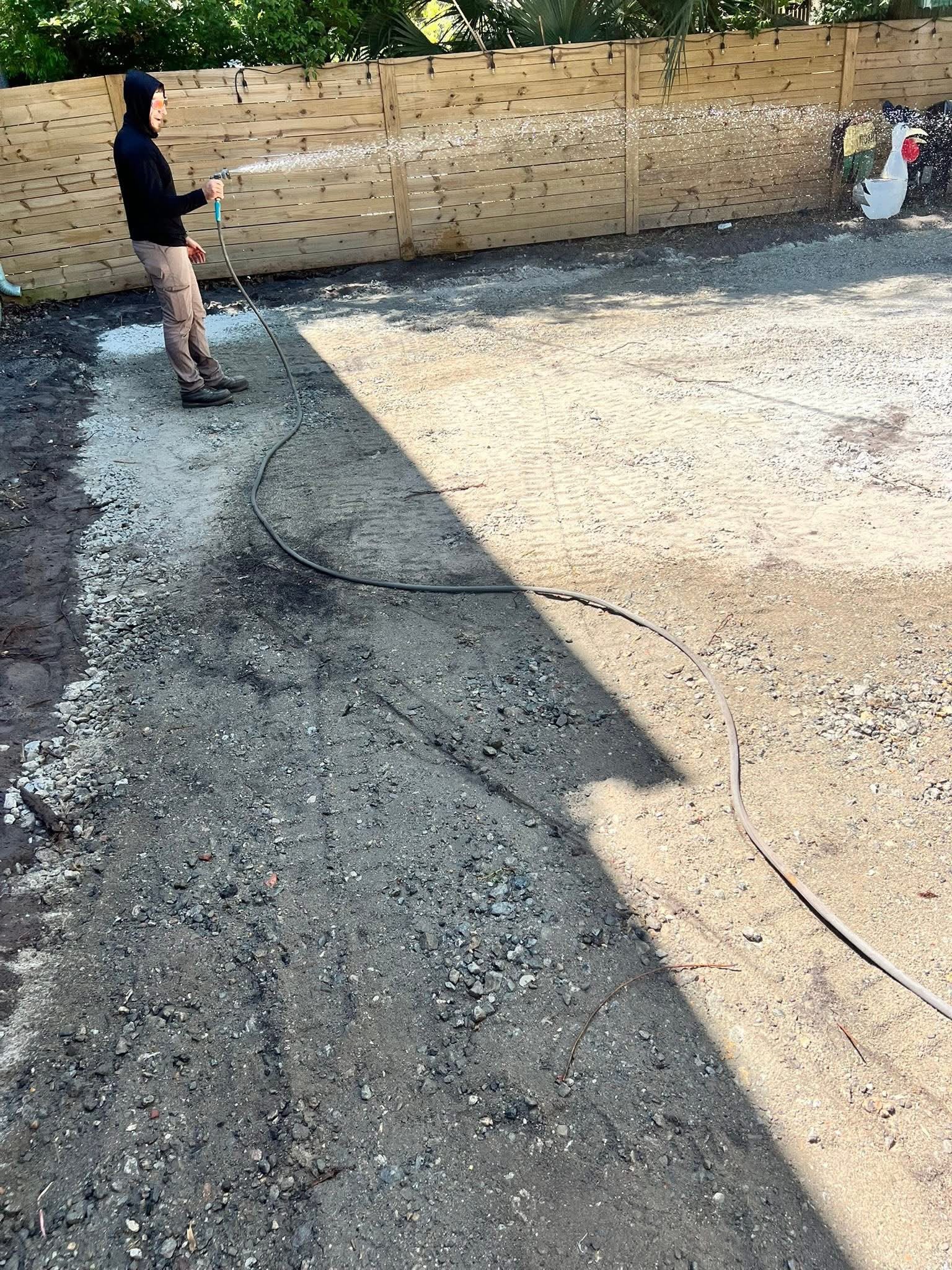
We pull out dirt, old concrete or whatever's there, down to the depth the job calls for.
Base & compaction
Stone in lifts, wetted and compacted one layer at a time. This is what stops the dips.
Screed & lay
A screeded sand bed, and the pattern strung out with line so the courses run straight.
Cuts, edging & sand
Saw cuts at the edges, edge restraint spiked down, and polymeric sand vibrated into the joints.
While we're there
Your yard is still your yard.
Paver work moves dirt and makes a mess. We stage material in one spot and haul off every bit of leftover when we finish. If you also need fencing, a deck or a pergola, we sequence it into the same project.
Common questions
What people always ask.
Pavers or poured concrete?
Concrete costs less up front but repairs badly once it cracks. Pavers lift and reset section by section, and on sandy coastal soil they move without breaking.
Can you use old Savannah brick?
Yes — it's a lot of what we do. Reclaimed brick gets hand-sorted, the broken ones tossed, and the rest laid herringbone on a sand bed. It reads like it's been there a hundred years. See our brick patios & walkways →
Will weeds grow in the joints?
Far less with polymeric sand properly compacted and watered in. Some will show up eventually, but not the carpet you get from plain sand joints.
Can you lay over existing concrete?
Sometimes, if the slab is sound and level and the added height won't block a door. If it's cracked or sunken it has to come out — we do that too.
How long does it take?
A typical patio runs two to four days. A circle or a reclaimed-brick patio takes longer because every edge piece is cut by hand. A driveway takes longer still, because of the excavation and base.
Next step
Get the estimate. Costs nothing.
Send us a photo of the spot on WhatsApp and we'll tell you what pattern fits and what it would run.